Just how safe are GLP-1 antagonists?
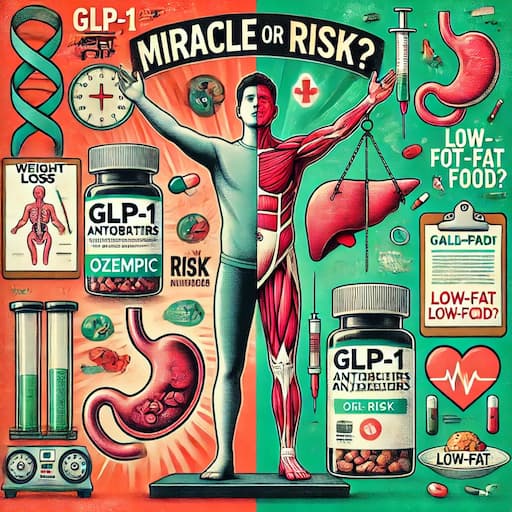
Over the past year, the American public has been swept away with another weight loss miracle. GLP-1 Antagonist is the classification of medications. The public knows them as Ozempic, Mongaro, ZepBound, and other names. The method of action for GLP-1 antagonists, also known as GLP-1 receptor agonists, are a class of medications used to treat type 2 diabetes. They work by stimulating the body’s insulin secretion and reducing the amount of glucose produced by the liver. GLP-1 antagonists also slow down the rate at which food is absorbed into the bloodstream, which helps to regulate blood sugar levels, per Novo Nordisk the pharmaceutical manufacturer of Ozempic. They produce significant weight loss because the client loses their appetite.
Now is this positive or negative? And just what are the risks and benefits? Well, I can tell you, just in my little practice, I have had two clients over the holidays, lose their gallbladders! What I mean by that is that their digestion got so backed up on Ozempic that they experienced gallstones so bad, they had to have gallbladder surgery, which means they had their gallbladder removed. And let me tell you, you need your gallbladder because it secretes enzymes and bile acids to digest the food we eat. Without your gallbladder, you will need to take gastric enzymes with every meal, and another medication! As well you will need to follow a Low-fat, therapeutic diet for the rest of your life.
What we are also seeing is that people are losing weight, but just what sort of weight are they losing? Remember the body always works to preserve itself and if the body does not receive its basal energy requirements (see the Mathematics of Weight Loss), it will break down muscle and then go to fat. People are losing muscle mass and why they look so gaunt after losing their weight.
So, these people on the GLP-1 antagonists will decrease the number of calories they can eat! Do you want to go from 2,000 Calories per day to 1,500 for a man or 1,500 Calories to 1,000 for a woman? When these individuals go off the GLP-1 antagonists, they will gain the weight back and fast, because they will never be able to eat normally again (they have decreased their muscle mass, muscle burns calories). In Medscape, an article entitled “Are we all Obesity Specialists Now?” discussed how easy it is for the public to obtain these medications and that, more than likely the patient will be on these medications for the rest of their life. Is that what you want? Do you want a pharmaceutical company to own your body? Is short-term gain, with all the risks (gallstones, gallbladder surgery, and more) WORTH THE RISK?
Stay tuned to the next article that will address other medications that work on neurotransmitters and, when combined with Behavior Nutrition Therapy, help to calm the food noise.
Book a Free 15-Minute Phone Consultation