Are you avoiding food and afraid to eat? There is a name for that…

Avoidant/Restrictive Food Intake Disorder (ARFID) is a complex and often misunderstood eating disorder. Unlike other eating disorders such as anorexia nervosa or bulimia nervosa, ARFID is not characterized by a preoccupation with body image or weight. Instead, it involves a pattern of eating that leads to significant nutritional deficiencies, weight loss, or failure to gain weight appropriately, and psychosocial impairment. This disorder can affect individuals of all ages, from young children to adults, and can have severe implications for physical health and emotional well-being.
Binge eating self-assessment quizKey points
- ARFID is an eating disorder involving avoidance or restriction of foods due to sensory issues, fears, or lack of interest in eating.
- Symptoms include weight loss, nutritional deficiencies, and social interference, requiring a comprehensive medical evaluation.
- Risk factors include genetic predisposition, developmental disorders like autism, anxiety, OCD, and past traumatic food experiences.
- Treatment often involves a multidisciplinary approach, including nutritional rehab, CBT, exposure therapy, and family-based therapy.
Quick navigation
What is ARFID?
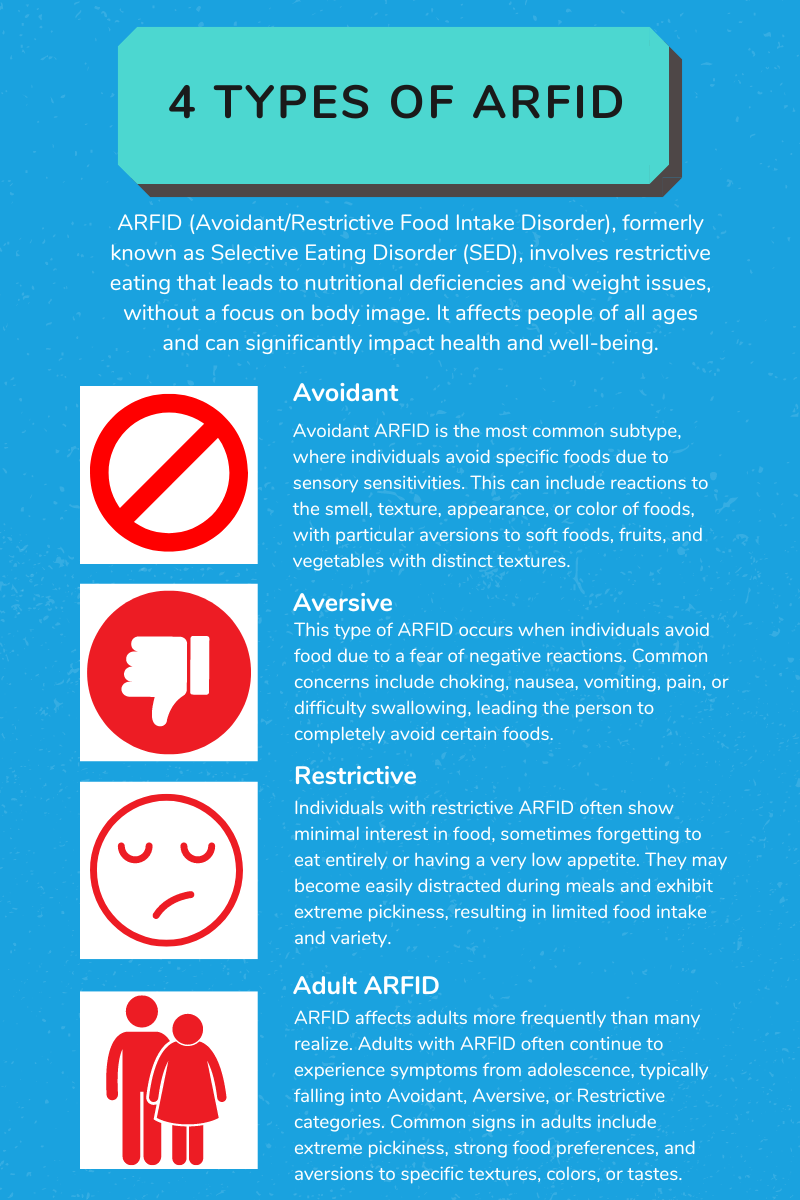
ARFID is an eating disorder where individuals avoid certain foods or restrict their intake of food. This avoidance or restriction is often due to one or more of the following reasons:
Sensory sensitivities: Individuals with ARFID may have heightened sensitivity to the taste, texture, smell, or appearance of certain foods. This can lead to a very limited diet that lacks variety and essential nutrients.
Fear of adverse consequences: Some individuals develop a fear of choking, vomiting, or having an allergic reaction to specific foods. This fear can cause them to avoid these foods altogether.
Lack of interest in eating: Unlike typical picky eating, which is usually temporary and does not cause health issues, those with ARFID may show a consistent lack of interest in food or eating, leading to inadequate nutritional intake.
Symptoms and diagnosis
The symptoms of ARFID can vary widely among individuals but generally include:
- Significant weight loss or failure to achieve expected weight gain in children.
- Nutritional deficiencies, such as anemia, vitamin deficiencies, or other health issues related to inadequate nutrition.
- Dependence on nutritional supplements or tube feeding to maintain adequate nutrition.
- Marked interference with social functioning, such as avoiding eating with others or being unable to participate in activities that involve food.
Diagnosis of ARFID typically involves a comprehensive evaluation by a healthcare provider, including a detailed medical history, physical examination, and possibly psychological assessment. It is essential to rule out other medical conditions or eating disorders that may present with similar symptoms.
Causes and risk factors
The exact cause of ARFID is not well understood, but several factors may contribute to its development:
Genetic predisposition: There may be a hereditary component, as ARFID can run in families.
Developmental factors: Children with developmental disorders, such as autism spectrum disorder, are at higher risk for developing ARFID.
Psychological factors: Anxiety disorders, obsessive-compulsive disorder (OCD), and other mental health conditions can increase the risk of ARFID.
Negative food-related experiences: Traumatic experiences related to eating, such as choking or severe vomiting, can trigger food avoidance behaviors.
Treatment approaches
Treatment for ARFID often requires a multidisciplinary approach, involving healthcare professionals such as doctors, dietitians, and therapists. Key components of treatment may include:
Nutritional rehabilitation: Ensuring the individual receives adequate nutrition is a primary goal. This may involve working with a dietitian to create a balanced meal plan and, if necessary, using nutritional supplements.
Cognitive-Behavioral Therapy (CBT): CBT can help individuals address and change negative thought patterns and behaviors related to food and eating.
Exposure Therapy: Gradual exposure to avoided foods in a controlled and supportive environment can help reduce fear and increase food variety.
Family-Based Therapy: Involving family members in treatment can provide support and improve the home environment for individuals with ARFID.
How Nutegra can help
At Nutegra, we specialize in providing comprehensive care for individuals struggling with ARFID. Our team of experienced professionals, including dietitians, therapists, and medical experts, works collaboratively to develop personalized treatment plans that address the unique needs of each client. We focus on nutritional rehabilitation, psychological support, and practical strategies to help individuals expand their dietary variety and overcome food-related fears.
Take the first step toward recovery
If you or a loved one are experiencing symptoms of ARFID, don’t wait to seek help. Early intervention is key to managing this condition effectively and improving overall health and well-being. At Nutegra, we are dedicated to supporting you on your journey to a healthier relationship with food. Together, we can work towards overcoming the challenges of ARFID and achieving a balanced, nourishing diet. Take the first step towards recovery today.
Book a Free 15-Minute Phone Consultation